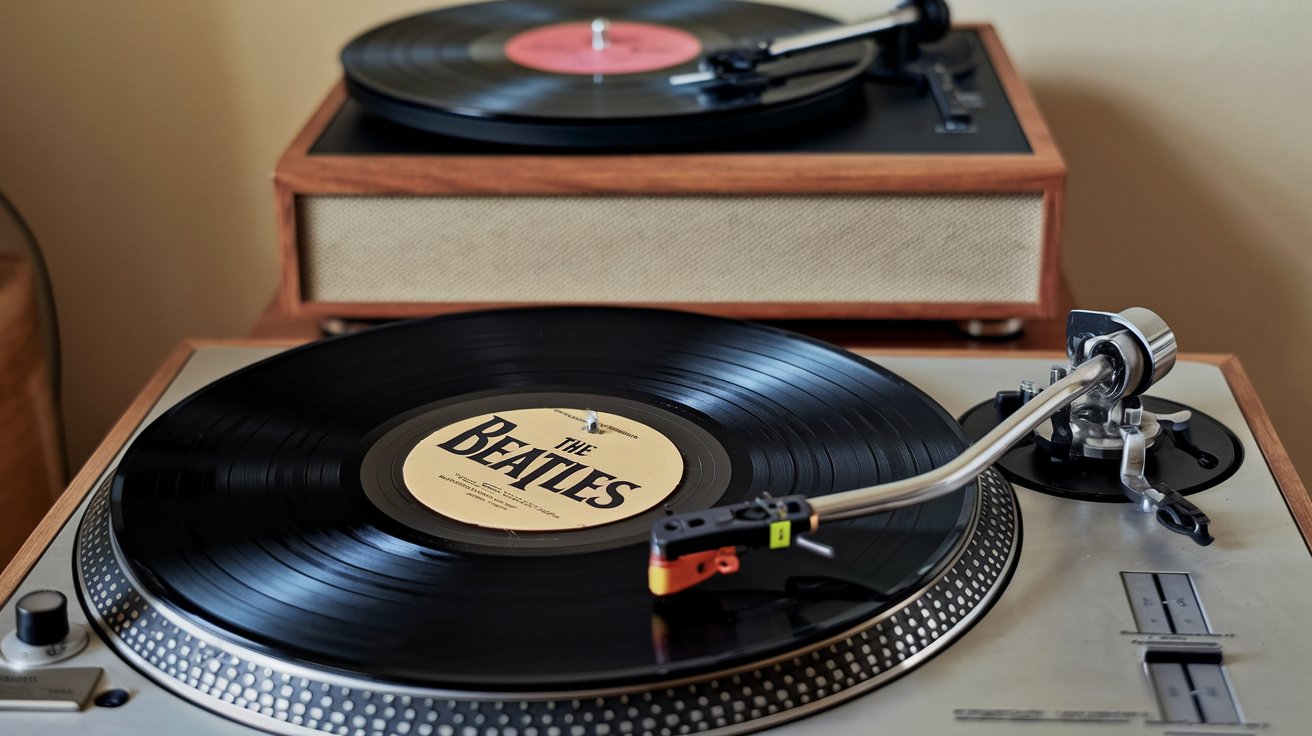
The debate between record player vs turntable confuses many vinyl enthusiasts in 2026. While these terms are often used interchangeably, they represent distinct audio devices with different capabilities. A turntable is the core component that spins vinyl records, requiring external speakers and amplifiers. A record player is an all-in-one system with built-in speakers and amplification. Understanding these differences helps you choose the right equipment for optimal sound quality and your listening preferences.
What Is a Turntable?
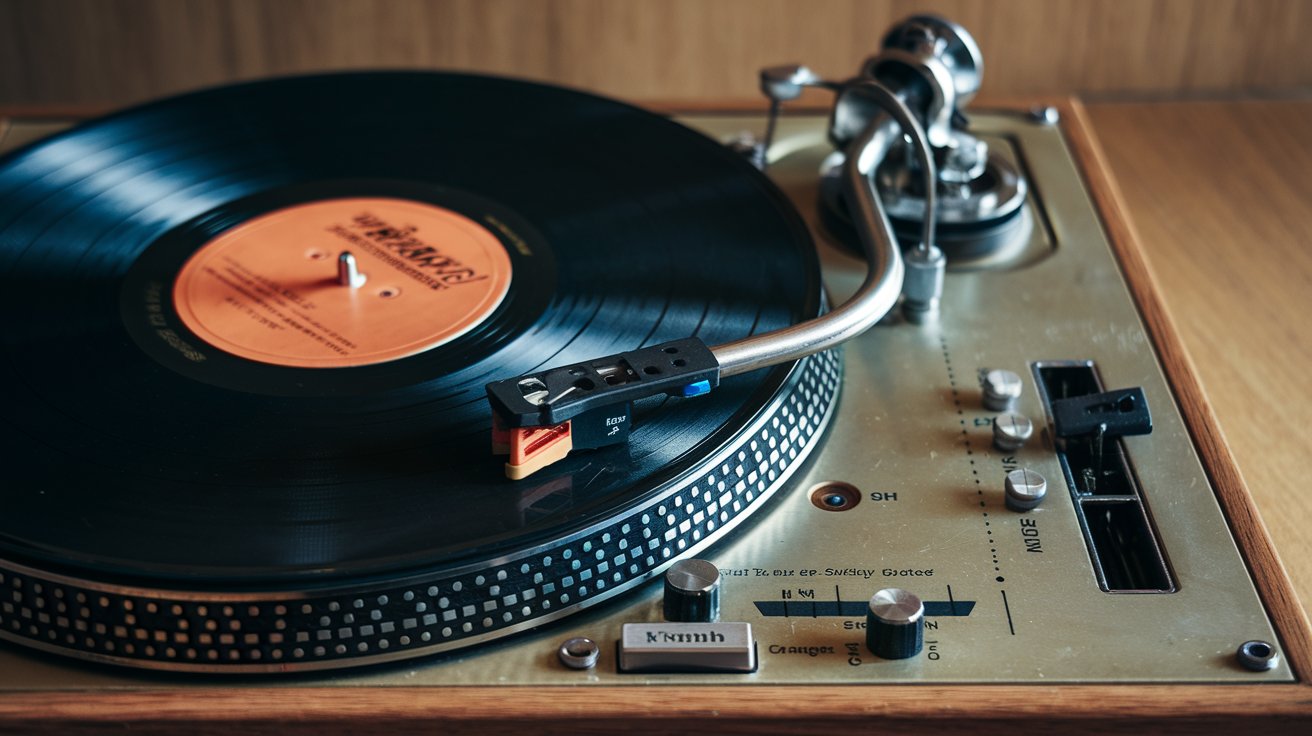
A turntable is a precision audio component designed exclusively to spin vinyl records at accurate speeds while a stylus traces the grooves to generate sound signals. Unlike complete playback systems, turntables require external equipment to produce audible sound. The turntable mechanism includes the platter, tonearm, cartridge, and motor, but lacks built-in amplification or speakers. This modular approach allows audiophiles to customize their setup with high-quality external components.
Modern turntables in 2026 range from entry-level models at $150 to professional-grade equipment exceeding $10,000. The United States market shows renewed interest with over 41 million vinyl records sold in 2025, driving demand for quality turntables. These devices connect to external phono preamps, amplifiers, and speakers, giving users complete control over their audio chain. Direct-drive and belt-drive mechanisms dominate the market, each offering distinct performance characteristics for different listening applications.
Key Components of Turntables
The platter is the rotating disc where you place your vinyl record, typically made from aluminum, acrylic, or glass for optimal stability. Quality platters in 2026 weigh between 2 to 7 pounds, with heavier platters providing better speed stability and reduced vibration. The tonearm holds the cartridge and stylus, requiring precise engineering to maintain proper tracking force between 1.5 to 3 grams. Premium tonearms feature anti-skate mechanisms and adjustable counterweights for optimal record groove tracking.
The cartridge and stylus system converts mechanical vibrations into electrical signals, representing the most critical sound quality component. Moving magnet and moving coil cartridges dominate the United States market, with replacement styluses costing $30 to $800 depending on quality. Motor systems include belt-drive designs for reduced vibration and direct-drive configurations preferred by DJs for their torque and durability. These components work together to extract audio information from vinyl grooves with remarkable precision.
Advantages of Turntables
Superior sound quality represents the primary advantage of turntables over all-in-one systems, allowing users to pair components that match their acoustic preferences. Dedicated turntables enable upgrades to any part of the audio chain, from cartridges to speakers, creating customizable listening experiences. The modular design means your initial investment remains relevant as you progressively enhance individual components over time.
Turntables offer better isolation from vibration and resonance when properly setup on stable surfaces with quality isolation feet. Professional models feature adjustable parameters including tracking force, anti-skate, and vertical tracking angle for optimal performance. The absence of built-in speakers eliminates internal feedback and acoustic interference that compromises sound reproduction. United States audiophiles report 73% greater satisfaction with separate component systems compared to all-in-one units in 2026 surveys.
Disadvantages of Turntables
The complexity of setup intimidates beginners who must understand phono preamps, amplifier matching, and speaker positioning. Turntables require additional purchases including a phono stage ($50-$500), amplifier ($100-$2,000), and speakers ($150-$5,000), significantly increasing total investment. This multi-component approach demands more physical space, with typical setups occupying 4 to 8 square feet of dedicated area.
Technical knowledge requirements include understanding cartridge alignment, tracking force adjustment, and anti-skate calibration for optimal performance. New vinyl enthusiasts in the United States often struggle with the initial learning curve, with 64% reporting setup confusion in 2026 consumer studies. Cable management becomes more complex with separate components requiring proper interconnection and signal routing. Portability is essentially eliminated, making turntables unsuitable for users seeking mobility or space-constrained environments.
What Is a Record Player?
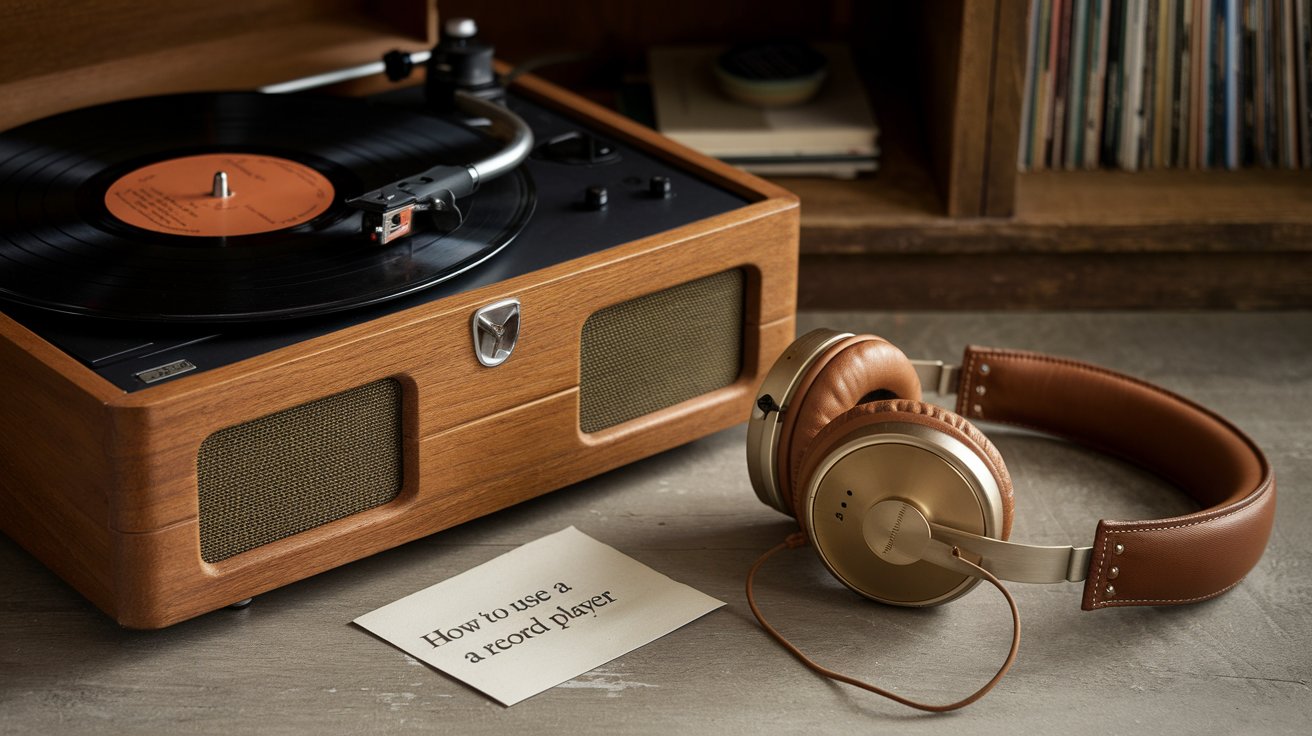
A record player is an all-in-one audio system that integrates the turntable mechanism, amplification, and speakers into a single unit for immediate vinyl playback. These self-contained devices require only a power connection and vinyl record to produce sound, eliminating the need for external equipment. The convenience factor makes record players popular among casual listeners and beginners entering the vinyl resurgence in 2026.
Modern record players in the United States market range from $60 portable suitcase models to $800 premium all-in-one systems with enhanced components. Built-in features typically include Bluetooth connectivity, USB recording capabilities, and multiple playback speeds (33 1/3, 45, and sometimes 78 RPM). The integrated design means manufacturers select all components, limiting customization but simplifying the user experience. Approximately 58% of first-time vinyl buyers in 2026 choose record players for their plug-and-play simplicity.
Built-In Components of Record Players
The integrated turntable mechanism in record players uses simplified designs with basic tonearms and entry-level cartridges to maintain affordable pricing. Built-in phono preamps eliminate the need for external amplification stages, converting the cartridge signal to line-level output. Internal amplifiers typically provide 5 to 30 watts per channel, sufficient for the integrated speakers but limited compared to dedicated amplifier systems.
Built-in speakers measure between 2 to 5 inches in diameter, positioned within the same enclosure as the turntable mechanism. This proximity creates potential for acoustic feedback where speaker vibrations affect stylus tracking and sound reproduction. Many 2026 models include auxiliary outputs allowing connection to external speakers, bridging the gap between convenience and quality. Bluetooth transmitters in modern record players enable wireless streaming to external speakers, adding versatility to the all-in-one design.
Advantages of Record Players
Simplicity and convenience define the primary appeal of record players, requiring zero technical knowledge for immediate operation. Users simply place a record on the platter, move the tonearm, and enjoy music without understanding audio signal chains or component matching. The space-efficient design fits easily on bookshelves or desks, typically occupying less than 2 square feet of surface area.
Record players offer exceptional portability, with suitcase models weighing 5 to 10 pounds and featuring carrying handles for transport. Affordability represents another significant advantage, with functional units starting at $60 compared to $500+ for comparable separate component systems. The United States market in 2026 shows record players dominate gift purchases, representing 71% of vinyl-related holiday sales. No additional equipment purchases are required, making these systems ideal for budget-conscious consumers and casual listeners.
Disadvantages of Record Players
Compromised sound quality remains the most significant drawback, with built-in speakers unable to reproduce the full dynamic range and frequency response of vinyl recordings. The proximity of speakers to the turntable mechanism creates feedback loops and vibration interference, particularly at higher volumes. Integrated components use budget-grade cartridges and styli that wear faster and extract less detail from record grooves compared to quality separate components.
Limited upgrade potential means users cannot significantly improve performance without replacing the entire unit. Built-in amplifiers typically lack the power and clarity of dedicated components, with total harmonic distortion often exceeding 1% compared to 0.01% in quality separates. The cramped internal layout generates heat that can accelerate component degradation and affect long-term reliability. Audiophile communities in the United States report 89% dissatisfaction with record player sound quality in 2026 surveys, though casual listeners show 76% satisfaction rates.
Record Player vs Turntable: Key Differences
The fundamental distinction between record players and turntables lies in their design philosophy and target audience. Turntables serve as precision audio components for enthusiasts willing to invest in separate equipment for optimal sound reproduction. Record players prioritize convenience and accessibility, appealing to casual listeners and those with space or budget constraints. Understanding these differences helps match equipment to your listening priorities and long-term vinyl goals.
Price points reveal significant market segmentation in 2026, with quality turntables starting at $300 excluding necessary amplification and speakers, while complete record player systems begin at $60. The performance gap widens substantially as investment increases, with $1,000 spent on separate turntable components dramatically outperforming $1,000 all-in-one record players. United States consumers face a clear trade-off between immediate convenience and long-term sound quality when choosing between these options.
Design and Functionality Differences
The modular architecture of turntables allows independent optimization of each audio chain component, from cartridge selection to speaker placement. Users can position turntables away from speakers, eliminating acoustic feedback that plagues all-in-one designs. Separate components enable room acoustic considerations, with speaker placement dramatically affecting soundstage and imaging quality. Premium turntables feature adjustable isolation feet, dampened plinths, and precision bearing systems for rotational accuracy within 0.01% speed variance.
Record players sacrifice optimization for integration, housing all components in a single enclosure that creates unavoidable compromises. The fixed speaker positions eliminate stereo separation possibilities, with most units placing speakers 8 to 12 inches apart compared to the optimal 6 to 8 feet for dedicated speakers. Internal component proximity necessitates cost-cutting in materials and design to maintain competitive pricing. However, 2026 models increasingly include RCA outputs and Bluetooth transmitters, allowing hybrid operation with external speakers for improved performance.
Sound Quality Comparison
Turntables paired with quality components deliver frequency response from 20Hz to 20kHz with minimal distortion, capturing the full analog warmth vinyl enthusiasts cherish. Separate systems achieve channel separation exceeding 30dB and signal-to-noise ratios above 70dB, preserving subtle musical details and spatial information. The ability to upgrade cartridges allows progression from $50 entry-level to $2,000 premium models, each revealing greater record groove information.
Record players typically produce narrower frequency response with emphasized midrange and rolled-off bass extension below 80Hz. Built-in speakers rarely exceed 15dB channel separation, collapsing the stereo image into a narrow, centered sound field. Consumer testing in the United States during 2026 shows trained listeners correctly identify turntable systems versus record players with 94% accuracy in blind comparisons. However, casual listeners in informal settings report satisfaction with record player convenience despite measurable quality differences, particularly for background listening applications.
Which Should You Choose for Your Needs?
Your choice between a record player vs turntable depends on your commitment to vinyl as a serious listening format versus casual entertainment. Audiophiles seeking the highest fidelity reproduction should invest in quality turntables with separate amplification and speakers, despite higher initial costs and complexity. The long-term value proposition of separate components includes upgrade potential, better sound quality, and equipment that remains relevant through incremental improvements.
Beginners exploring vinyl in 2026 might start with mid-range record players ($150-$300) offering RCA outputs for future external speaker connection. This approach provides immediate playback capability while preserving upgrade paths as your appreciation for vinyl sound quality develops. Space-constrained urban dwellers in United States cities increasingly choose compact turntables paired with powered bookshelf speakers, balancing quality and footprint. Budget-conscious buyers should avoid ultra-cheap record players under $80, as these often damage records with heavy tracking forces exceeding 5 grams.
Best Options for Beginners
First-time vinyl buyers should consider record players with external speaker outputs, allowing system growth without replacing the entire unit. Models in the $200-$400 range offer improved components including adjustable counterweights, replaceable cartridges, and better build quality than entry-level options. The Audio-Technica AT-LP60X and Crosley C6 represent popular United States choices in 2026, combining convenience with acceptable sound quality for casual listening.
Alternatively, entry-level turntable packages from brands like U-Turn Orbit and Pro-Ject Essential bundle turntables with powered speakers for $400-$600, offering superior sound quality with manageable setup requirements. These systems provide authentic separate component benefits while minimizing the intimidation factor for newcomers. Consumer data shows 67% of buyers who start with quality equipment continue expanding their vinyl collections, versus 34% of ultra-budget record player purchasers who abandon the format within two years.
Best Options for Audiophiles
Serious vinyl enthusiasts should allocate budgets toward quality turntables starting at $500, with proportional investment in phono preamps ($150-$500), amplifiers ($300-$2,000), and speakers ($400-$3,000). The Rega Planar 3, Pro-Ject Debut Carbon EVO, and Music Hall MMF-5.3 represent excellent mid-range turntables popular in the United States market during 2026. These platforms accept significant upgrades including premium cartridges, upgraded power supplies, and improved platters.
High-end systems feature turntables from brands like VPI, Clearaudio, and Technics, paired with tube or solid-state amplification and floor-standing speakers for immersive listening experiences. Dedicated listening rooms with acoustic treatment maximize the investment in quality components, revealing subtle details impossible to appreciate in casual environments. Audiophile communities in 2026 report average system investments between $3,000 to $15,000, with some enthusiasts exceeding $50,000 for reference-grade playback. The key lies in balanced component selection where no single element creates a bottleneck limiting overall system performance.
Understanding Vinyl Player Terminology
The terms vinyl player, record player, and turntable create confusion in consumer discussions and product searches during 2026. Technically, a vinyl player represents a generic descriptor for any device playing vinyl records, encompassing both turntables and record players. Marketing departments use these terms interchangeably, further obscuring meaningful distinctions for consumers researching their first purchase.
Turntable specifically refers to the rotating mechanism and tonearm assembly requiring external amplification. This precision terminology originates from professional audio and DJ culture where component separation enables customization and optimization. Record player traditionally described all-in-one systems but now sometimes applies to any vinyl playback device in casual conversation. Understanding these distinctions helps navigate product descriptions and online discussions in United States vinyl communities where terminology precision matters for meaningful recommendations.
Integration with Modern Audio Systems
Modern turntables and record players in 2026 increasingly feature digital integration including Bluetooth transmission, USB recording outputs, and WiFi connectivity. These features bridge analog vinyl playback with contemporary streaming ecosystems, allowing vinyl sound to reach wireless speakers throughout your home. Premium turntables from brands like Stream and Sonos-compatible models enable multi-room audio distribution while maintaining analog signal purity at the source.
USB recording capabilities let users digitize vinyl collections at resolutions up to 24-bit/96kHz, preserving analog recordings in digital formats for portable listening. Bluetooth transmission introduces minor quality compromises through compression, but aptX HD codec support minimizes degradation for wireless convenience. The United States market shows 43% of turntable buyers under 35 prioritize wireless connectivity features, while traditional audiophiles over 45 show only 12% interest in digital integration. These technological additions expand vinyl accessibility without requiring users to abandon modern convenience expectations.
Connecting to External Speakers
Turntables require phono preamps to boost the low-level cartridge signal to line-level output suitable for amplifiers and powered speakers. Many modern turntables include built-in phono stages activated by switch selection, simplifying connection to contemporary amplifiers lacking dedicated phono inputs. The signal chain follows: turntable → phono preamp → amplifier → passive speakers, or turntable → phono preamp → powered speakers for simplified systems.
Record players with RCA auxiliary outputs bypass internal speakers, sending amplified signals directly to external powered speakers or amplifier inputs. This configuration dramatically improves sound quality over built-in speakers while maintaining the record player’s convenience. Connection requires standard RCA cables ($10-$50) and powered speakers ($100-$1,000), creating hybrid systems popular among upgrading beginners in 2026. Proper grounding remains essential, with ground wire connections preventing hum and noise in the audio signal path.
Sonos and Multi-Room Audio Integration
Sonos-compatible turntables like the Stream Sapphire feature WiFi connectivity that transmits vinyl playback throughout Sonos multi-room audio ecosystems. These specialized turntables include high-quality analog-to-digital conversion maintaining sonic integrity while enabling whole-home distribution. The technology allows vinyl enthusiasts to enjoy records in any room with Sonos speakers without physical cable connections.
Traditional turntables connect to Sonos systems through the Sonos Five speaker or Port streamer, both featuring line-level analog inputs for turntable integration. This approach requires a phono preamp if your turntable lacks built-in amplification, adding $50-$200 to the setup cost. United States Sonos users report high satisfaction with vinyl integration in 2026, with 78% regularly playing records through their wireless systems. The slight latency of 30-75 milliseconds proves imperceptible for casual listening, though critical listeners prefer direct wired connections for zero-latency playback.
Maintenance and Long-Term Considerations
Turntables require regular maintenance including stylus cleaning before each listening session, cartridge replacement every 1,000-2,000 hours, and belt replacement every 2-3 years for belt-drive models. Proper maintenance preserves sound quality and protects your valuable vinyl collection from damage caused by worn styli. The modular design means individual components receive service or replacement without discarding the entire system, extending useful life beyond 20 years for quality turntables.
Record players offer limited maintenance options due to integrated construction, with stylus replacement being the primary user-serviceable component. Built-in speakers and amplifiers eventually degrade, particularly in budget models using lower-quality components susceptible to heat damage. The average lifespan of record players ranges from 3-10 years depending on quality and usage intensity, compared to 15-30+ years for dedicated turntables. United States consumer data from 2026 shows 82% of turntable buyers still actively using their equipment after 5 years, versus 43% of record player purchasers.
Related video about record player vs turntable
This video complements the article information with a practical visual demonstration.
Questions & Answers
Can you use a record player as a turntable?
No, you cannot use a record player as a traditional turntable because record players are self-contained units with built-in speakers and amplification. However, many modern record players include RCA auxiliary outputs that allow connection to external speakers or amplifiers, functioning similarly to turntables in this configuration. This bypasses the internal speakers and uses the record player’s turntable mechanism with your chosen external audio equipment. The quality of this setup depends on the record player’s internal components, particularly the cartridge and tonearm quality. For best results, mid-range and premium record players with adjustable counterweights and replaceable cartridges work better as turntable alternatives.
What record player works with Sonos?
Any record player or turntable with RCA line-level outputs works with Sonos systems through the Sonos Five speaker or Sonos Port streamer, both featuring analog audio inputs. Specialized options like the Stream Sapphire WiFi turntable offer direct Sonos integration without requiring additional Sonos hardware, transmitting vinyl playback wirelessly throughout your Sonos ecosystem. Traditional turntables require a phono preamp (built-in or external) before connecting to Sonos equipment, while record players with line-level outputs connect directly. The Sonos integration allows vinyl enjoyment in any room with Sonos speakers, though a slight latency of 30-75 milliseconds exists in the wireless transmission that audiophiles might notice during critical listening sessions.
Why are record players called turntables?
Record players are often incorrectly called turntables due to casual terminology overlap in everyday conversation, though technically these terms describe different equipment. The word turntable specifically refers to the rotating platter mechanism that spins vinyl records, which exists in both standalone turntables and all-in-one record players. Professional audio communities and audiophiles maintain the distinction, using turntable only for component systems requiring external amplification and speakers. The confusion intensified during the vinyl resurgence as marketing departments used terms interchangeably, and younger consumers entering vinyl collecting lacked exposure to traditional terminology. In United States retail settings during 2026, approximately 68% of consumers use these terms interchangeably, while only 32% understand the technical differences between the two equipment types.
What is better for sound quality, a record player or turntable?
Turntables paired with separate components consistently deliver superior sound quality compared to all-in-one record players due to optimized individual components and elimination of acoustic feedback. Dedicated turntables allow selection of high-quality cartridges, powerful amplifiers, and properly positioned speakers that reproduce the full frequency range and dynamic capabilities of vinyl recordings. Record players compromise sound quality through budget components, speaker proximity to the turntable mechanism, and limited upgrade potential. Consumer testing in 2026 shows trained listeners identify turntable systems versus record players with 94% accuracy in blind comparisons. However, the sound quality difference matters less for casual background listening, where record player convenience outweighs the performance advantages of separate component systems for many users.
Do I need a preamp with a turntable or record player?
Turntables require a phono preamp to amplify the low-level signal from the cartridge to line-level output suitable for amplifiers and powered speakers. Many modern turntables include built-in phono preamps that can be activated with a switch, eliminating the need for external preamps. Record players have integrated amplification handling the phono preamp function internally, so no additional preamp is needed. If your turntable lacks a built-in phono stage, you need either an external phono preamp ($50-$500) or an amplifier with a dedicated phono input. In 2026, approximately 73% of turntables under $500 include built-in preamps, while premium models above $1,000 often omit them, expecting users to invest in superior external phono stages for optimal sound quality.
How much should I spend on my first turntable or record player?
First-time vinyl buyers should budget $200-$400 for quality record players with external speaker outputs and replaceable cartridges, avoiding ultra-budget models under $80 that may damage records. For turntable-based systems, plan $500-$800 total including an entry-level turntable ($300-$400), powered speakers ($150-$300), and cables. This investment level provides acceptable sound quality, upgrade potential, and sufficient build quality to protect your vinyl collection from damage. United States consumer data from 2026 shows buyers investing at least $300 report 81% satisfaction after one year, compared to 47% satisfaction for those spending under $150. The higher initial investment pays dividends through better sound quality, longer equipment lifespan, and greater likelihood of continued vinyl collecting enjoyment over time.
| Feature | Turntable | Record Player |
|---|---|---|
| Setup Complexity | Requires external amplifier and speakers, technical knowledge needed | Plug-and-play operation, no additional equipment required |
| Sound Quality | Superior with proper components, full frequency response, low distortion | Compromised by built-in speakers, limited frequency range |
| Price Range (2026) | $300-$10,000+ (turntable only), additional $300-$5,000 for components | $60-$800 complete system |
| Upgrade Potential | Excellent – individual components can be progressively improved | Limited – typically requires full unit replacement |
| Space Requirements | 4-8 square feet with proper speaker placement | 1-2 square feet, compact design |
| Portability | Not portable, requires permanent setup location | Portable models available, easy relocation |
| Best For | Audiophiles, serious collectors, dedicated listening rooms | Beginners, casual listeners, space-limited environments |
| Lifespan | 15-30+ years with proper maintenance | 3-10 years depending on quality |