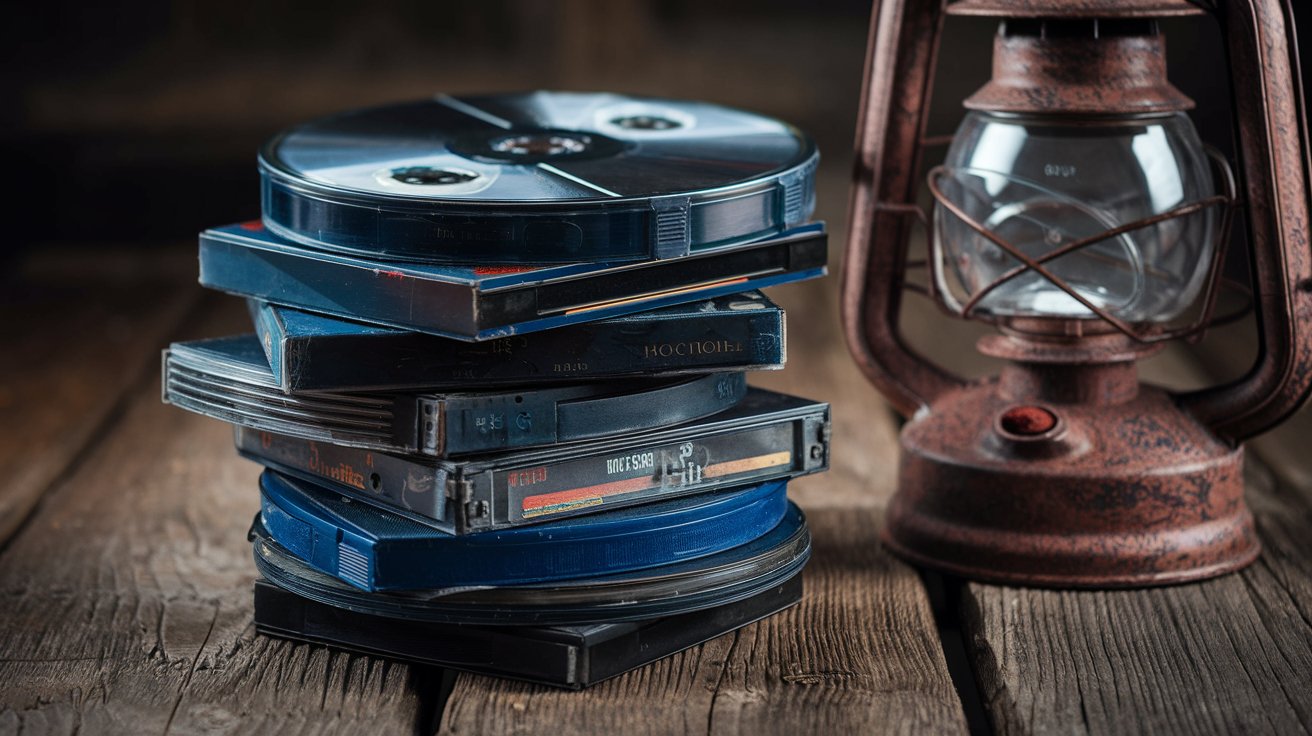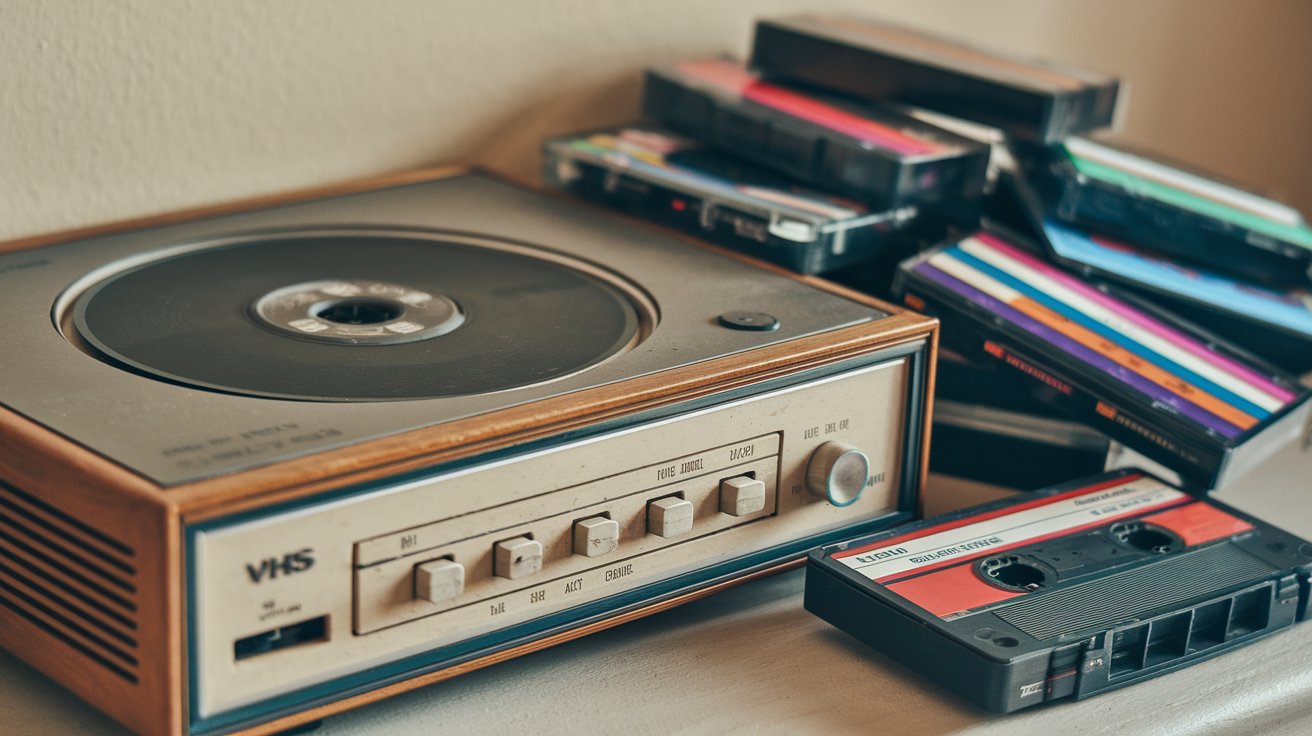
VHS tapes were invented in 1976 by the Japanese company JVC (Victor Company of Japan), revolutionizing home entertainment forever. The Video Home System, commonly known as VHS, officially launched in Japan on September 9, 1976, and arrived in the United States in 1977. This magnetic tape format dominated the home video market for over two decades, allowing families to record television programs and watch movies at home for the first time. Understanding the complete history of VHS technology helps explain how it shaped modern streaming culture and home entertainment as we know it today.
The Invention of VHS Technology in 1976
The VHS tape format was officially invented in 1976 by the Victor Company of Japan, commonly known as JVC. Engineers at JVC, led by Yuma Shiraishi and Shizuo Takano, developed the Video Home System as a response to Sony’s Betamax format, which had been released a year earlier in 1975. The first VHS videocassette recorder model, the Victor HR-3300, debuted in Japan on September 9, 1976, priced at approximately 256,000 yen (around $1,060 in 1976 dollars). This groundbreaking technology used half-inch magnetic tape housed in a plastic cassette measuring 7.4 inches wide, 4.1 inches deep, and 1 inch thick.
JVC’s strategic decision to make VHS an open standard became crucial to its eventual market dominance. Unlike Sony, which kept Betamax proprietary, JVC licensed VHS technology to numerous manufacturers including Panasonic, Sharp, Hitachi, and RCA. This licensing strategy created a broader market presence and lower consumer prices. The original VHS format could record up to two hours of video content, which was significantly longer than Betamax’s initial one-hour capacity, making it more practical for recording full-length movies and sporting events.
When VHS Arrived in America (1977)
VHS technology reached the United States market in 1977, approximately one year after its Japanese debut. RCA became one of the first major American companies to adopt and distribute VHS players under their SelectaVision brand name. The initial VCR cost in 1977 ranged from $1,000 to $1,400, which equals approximately $5,000 to $7,000 in 2026 dollars when adjusted for inflation. This high price point meant that VHS technology was initially a luxury item accessible primarily to affluent households and technology enthusiasts across America.
The American market introduction faced significant competition from Sony’s Betamax, which had launched in the US in 1975. However, VHS gained traction in America due to its longer recording time and broader manufacturer support. By 1978, multiple electronics retailers across the United States began stocking VHS equipment from various brands. The format war between VHS and Betamax became one of the most famous technology battles in American consumer electronics history, ultimately resulting in VHS becoming the dominant standard by the mid-1980s throughout the United States and globally.
The First Movie Released on VHS
The first major theatrical film released on VHS in the United States was “The Young Teacher,” distributed in 1977, though some sources also cite “Patton” and “The Sound of Music” among the earliest releases by Magnetic Video Corporation. In December 1977, Magnetic Video Corporation, later acquired by 20th Century Fox, became the first company to release a significant catalog of theatrical films on VHS format. Their initial lineup included approximately 50 classic titles from the Fox film library, marking the birth of the home video rental and sales industry in America.
These early VHS movie releases were priced primarily for rental stores rather than individual consumers, with typical retail prices ranging from $50 to $85 per tape (equivalent to $250 to $425 in 2026 dollars). The high pricing strategy reflected the industry’s expectation that consumers would rent rather than purchase films. Interestingly, one of the most valuable VHS tapes ever sold was a sealed copy of “Back to the Future,” which fetched approximately $75,000 at auction in recent years, though this extraordinary price reflected its rarity as a sealed promotional item rather than typical market value. The availability of movies on VHS fundamentally changed American entertainment habits, creating the foundation for today’s streaming culture.
When VHS Tapes Became Popular in America
VHS tapes achieved mainstream popularity in the United States during the early to mid-1980s, particularly between 1983 and 1987. Several factors contributed to this surge in adoption: VCR prices dropped significantly as manufacturing scaled up, movie studios expanded their VHS catalogs, and video rental stores proliferated across American communities. By 1985, approximately 20% of American households owned a VCR, and this number climbed rapidly to over 60% by 1989, making VHS one of the fastest-adopted consumer technologies of the decade.
The peak popularity period for VHS extended from the late 1980s through the late 1990s. During this golden era, VHS rental stores like Blockbuster Video became cultural institutions in American neighborhoods. By 1990, a blank VHS tape cost approximately $3 to $8 depending on recording length and brand quality, making it affordable for families to record television programs and build personal video libraries. Pre-recorded movie prices also decreased substantially, with new releases typically priced between $19.99 and $24.99 by the early 1990s. The format became so ubiquitous that VHS ownership in America peaked at approximately 90% of households by the mid-1990s, representing the format’s absolute dominance in home entertainment before DVD technology emerged.
What Video Formats Existed Before VHS
Before VHS revolutionized home video, several earlier video formats attempted to bring moving pictures into American homes with varying degrees of success. The most significant predecessor was reel-to-reel videotape, introduced for professional broadcast use in 1956 by Ampex Corporation. These professional systems used two-inch-wide tape and machines that cost over $50,000, making them impractical for consumer use. Sony introduced the first consumer-oriented video format, the CV-2000, in 1965, but its high cost and complexity limited adoption in the American market.
The U-matic format, released by Sony in 1971, represented another important pre-VHS technology. U-matic used three-quarter-inch tape in cassettes and became popular in educational institutions, corporations, and television news gathering, but remained too expensive for widespread home use. Additionally, the Cartrivision system launched in 1972 as one of the first true attempts at a home video recorder in America, combining a television set with a built-in VCR. However, Cartrivision failed commercially due to its $1,600 price tag and limited recording capabilities. Sony’s Betamax, introduced in 1975, became VHS’s direct competitor and the most successful pre-VHS home video format, though it ultimately lost the format war. These earlier technologies paved the way for VHS’s eventual success by demonstrating consumer demand for home video recording and playback capabilities.
VHS Technology Specifications and Features
The VHS format utilized half-inch magnetic tape wound within a plastic cassette shell to record and play video content. The system employed a helical scan recording method where video heads rotated while the tape moved linearly, creating diagonal tracks across the tape surface. Standard VHS offered a horizontal resolution of approximately 240 lines, which was adequate for television viewing on the CRT displays common in American homes during the format’s heyday. The tape moved at a speed of 1.31 inches per second in standard play (SP) mode, allowing a standard T-120 cassette to record up to two hours of content.
VHS technology evolved throughout its lifespan with several important improvements. Long Play (LP) and Extended Play (EP/SLP) modes were introduced, doubling or tripling recording time to four or six hours respectively, though at reduced video quality. VHS Hi-Fi audio, introduced in 1984, dramatically improved sound quality by recording audio using the same helical scan method as video. Super VHS (S-VHS), launched in 1987, offered improved resolution of approximately 400 lines and became popular among videographers and enthusiasts. The VHS format also supported features like on-screen programming, commercial skip functions, and time-lapse recording, making it remarkably versatile for American consumers throughout the 1980s and 1990s. These technical capabilities made VHS the most successful analog video format in history.
The Decline and Discontinuation of VHS
The decline of VHS began in the late 1990s with the introduction of DVD (Digital Versatile Disc) technology in 1997. DVDs offered superior video and audio quality, more durable media, additional features like multiple language tracks and bonus content, and a more compact format. By 2001, DVD players outsold VCRs in America for the first time, marking a definitive shift in consumer preference. However, VHS maintained significant market presence through the early 2000s due to its established base of content and lower hardware costs, particularly in budget-conscious households and for recording television programs.
Major retailers began phasing out VHS products gradually throughout the 2000s. The last major Hollywood film released on VHS in America was “A History of Violence” by New Line Cinema in 2006, effectively marking the end of mainstream VHS distribution. By 2008, major electronics manufacturers including JVC and Panasonic had discontinued VCR production for the American market. The final VHS-only video rental store chains closed or converted to DVD by the mid-2000s, though Blockbuster Video maintained VHS rental sections until approximately 2010 in some locations. As of 2026, VHS has largely become a nostalgic format collected by enthusiasts and preserved in archives, with occasional renewed interest from collectors valuing rare or culturally significant tapes. The format’s discontinuation represented the end of an era that had defined home entertainment for nearly three decades in American households.
VHS Pricing Throughout Different Eras
Understanding how much VHS equipment and tapes cost throughout different periods provides insight into the format’s accessibility and market evolution. In 1977, when VHS first arrived in America, VCR units cost between $1,000 and $1,400 (approximately $5,000 to $7,000 in 2026 dollars), making them luxury items. By 1980, increased competition and manufacturing efficiency reduced prices to approximately $600 to $800. The mid-1980s saw dramatic price drops, with VCR prices falling to $300 to $500 by 1985, contributing significantly to the format’s mass adoption across American households.
By 1990, consumers could purchase a basic VCR for $200 to $300, and budget models were available for under $150 as the format reached market maturity. Blank VHS tapes in 1990 typically cost $3 to $8 depending on length and brand, making home recording affordable for average families. Pre-recorded movie prices also evolved significantly: early releases in the late 1970s were priced at $50 to $85 for rental store inventory, but by the late 1980s, studios adopted lower pricing strategies with new releases typically costing $19.99 to $24.99 for consumer purchase. Older catalog titles often sold for $9.99 to $14.99. By the late 1990s and early 2000s, as DVD competition intensified, VHS movie prices dropped further, with many titles available for under $10. This pricing evolution made VHS the most economically accessible video format in American history, contributing to its unprecedented market penetration.
VHS Impact on American Culture and Society
The introduction of VHS technology fundamentally transformed American entertainment culture and viewing habits in ways that continue to influence modern streaming behavior. For the first time, families gained control over their viewing schedules, no longer bound by broadcast television timetables. The ability to record programs revolutionized how Americans consumed content, creating the concept of “time-shifting” that remains central to modern viewing habits. VHS enabled the birth of the home video rental industry, which became a $16 billion market in the United States by the mid-1990s, creating approximately 300,000 jobs in video rental stores nationwide.
VHS also democratized filmmaking and video content creation in America. Consumer-grade camcorders using VHS and VHS-C formats became affordable in the late 1980s, allowing families to document weddings, birthdays, vacations, and everyday moments in ways previously impossible. This created a generation of home video archives that captured authentic American life during the 1980s and 1990s. The format influenced American dating culture, with “movie nights” at home becoming common social activities. It supported education through widespread adoption in American schools for instructional videos. VHS even impacted American fitness culture, as workout videos became a billion-dollar industry by the late 1980s, led by personalities like Jane Fonda and Richard Simmons. The format’s influence extended to politics, with campaign videos distributed on VHS, and to religion, with sermons and religious programming widely circulated on tape throughout American communities.
The VHS vs. Betamax Format War
The format war between VHS and Betamax became one of the most significant technology battles in American consumer electronics history, with lessons that continue to influence business strategy today. Sony’s Betamax launched first in 1975, offering technically superior video quality with approximately 250 lines of resolution compared to VHS’s 240 lines. However, VHS won the American market despite Betamax’s technical advantages due to several strategic factors: longer recording time (two hours versus Betamax’s initial one hour), lower manufacturing costs through open licensing, and crucially, broader support from movie studios and rental stores across America.
By the early 1980s, VHS had captured approximately 60% of the American VCR market, with Betamax holding the remaining 40%. However, this gap widened rapidly as more American consumers chose VHS due to its superior availability of pre-recorded content and rental options. The adult entertainment industry’s preference for VHS also significantly influenced consumer adoption, though this factor is rarely discussed in official histories. By 1988, Betamax’s market share in America had fallen below 10%, and Sony effectively conceded defeat by beginning to produce VHS equipment in 1988. Sony officially discontinued Betamax production in 2016, though by then it had been essentially obsolete for decades. The VHS victory established important business lessons about the importance of content availability, strategic partnerships, and market ecosystem development over pure technical superiority—lessons that apply to modern technology platform competitions in 2026.
VHS Collecting and Nostalgia in Modern America
Despite being obsolete technology, VHS tapes have experienced renewed interest among collectors and nostalgia enthusiasts across America since the mid-2010s. Certain rare VHS tapes have sold for extraordinary prices at auction, with sealed Disney “Black Diamond” editions, horror movie rarities, and promotional copies fetching hundreds or even thousands of dollars. The sealed “Back to the Future” promotional tape that sold for approximately $75,000 represents an extreme example, but numerous tapes regularly sell for $50 to $500 in the collector market as of 2026. This collecting phenomenon reflects broader American nostalgia for 1980s and 1990s culture among millennials and Generation X.
Several factors drive modern VHS collecting in America: nostalgic appeal for childhood memories, appreciation for unique cover art and packaging that differs from digital formats, interest in content that was never reissued on DVD or streaming services, and the aesthetic preferences of some film enthusiasts who appreciate VHS’s distinctive visual characteristics. Some American cities now host VHS swap meets and conventions where enthusiasts trade tapes and equipment. Artists and filmmakers have embraced the VHS aesthetic in music videos and independent films, deliberately recreating the format’s tracking errors and color characteristics. Approximately 15-20 specialized shops across the United States now focus specifically on VHS sales as of 2026. However, practical VHS playback faces challenges as working VCRs become increasingly scarce, with functioning units and repair services commanding premium prices. This creates a race against time for video archivists working to preserve historically significant VHS content before equipment failure makes playback impossible.
Related video about when were vhs tapes invented
This video complements the article information with a practical visual demonstration.
FAQ – Common Questions
How much did a VCR cost in 1977 when VHS first came to America?
When VHS first arrived in the United States in 1977, VCR units cost between $1,000 and $1,400, which equals approximately $5,000 to $7,000 when adjusted to 2026 dollars. This high price point made VHS initially a luxury item accessible primarily to affluent households and early technology adopters. RCA was among the first major American distributors, selling VHS players under their SelectaVision brand name. Prices decreased significantly throughout the 1980s as manufacturing scaled up and competition increased, with units costing around $300 to $500 by 1985 and under $200 by the early 1990s.
What VHS tape was sold for $75,000?
A sealed promotional copy of “Back to the Future” on VHS sold for approximately $75,000 at auction, representing one of the highest prices ever paid for a VHS tape. This extraordinary value resulted from its extreme rarity as a sealed promotional item rather than typical market value for VHS tapes. Other valuable VHS tapes include certain sealed Disney “Black Diamond” editions, rare horror films, and obscure titles never reissued on modern formats. Most collectible VHS tapes sell for significantly less, typically ranging from $50 to $500 depending on rarity, condition, and cultural significance among collectors in the modern American market as of 2026.
What was the very first movie released on VHS in America?
The first major theatrical films released on VHS in the United States included “The Young Teacher” and titles from Magnetic Video Corporation’s catalog in 1977, including classics like “Patton” and “The Sound of Music.” In December 1977, Magnetic Video Corporation became the first company to release a significant catalog of approximately 50 theatrical films from the 20th Century Fox library on VHS format. These early releases were priced primarily for video rental stores at $50 to $85 per tape rather than individual consumers. This marked the beginning of the home video rental and sales industry that would transform American entertainment culture throughout the 1980s and 1990s.
How much did a VHS tape cost in 1990?
In 1990, blank VHS tapes typically cost between $3 and $8 depending on recording length (T-120 or T-160) and brand quality, making home recording affordable for average American families. Pre-recorded movie VHS tapes in 1990 cost approximately $19.99 to $24.99 for new releases, while older catalog titles often sold for $9.99 to $14.99. VCR units themselves cost around $200 to $300 for standard models, with budget options available under $150. These accessible prices contributed to VHS reaching approximately 60% household penetration in America by 1990, continuing its climb toward peak market saturation of roughly 90% by the mid-1990s.
When did VHS tapes stop being made and sold in America?
Major Hollywood studios stopped releasing films on VHS in 2006, with “A History of Violence” by New Line Cinema being among the last major theatrical releases on the format. By 2008, major electronics manufacturers including JVC and Panasonic had discontinued VCR production for the American market. Retail chains like Best Buy and Circuit City phased out VHS inventory between 2003 and 2008. Blockbuster Video maintained VHS rental sections in some locations until approximately 2010, though most had converted entirely to DVD by 2006. The format’s decline began in the late 1990s with DVD’s introduction and accelerated rapidly in the early 2000s as consumers embraced superior digital quality and additional features offered by DVD technology.
When were VHS tapes most popular in the United States?
VHS tapes achieved peak popularity in America from the late 1980s through the late 1990s, with household penetration reaching approximately 90% by the mid-1990s. The format became mainstream between 1983 and 1987 as VCR prices dropped significantly and video rental stores proliferated across American communities. By 1985, about 20% of American households owned VCRs, rapidly climbing to over 60% by 1989. The golden era of VHS lasted throughout the 1990s, when video rental became a cultural institution and VHS dominated home entertainment before DVD technology began replacing it starting in the late 1990s. This period represented VHS’s absolute dominance in the American home video market.
| Timeline Event | Important Details | Impact on Americans |
|---|---|---|
| 1976 Invention | JVC creates VHS in Japan on September 9, 1976 | Foundation for home video revolution |
| 1977 US Launch | VHS arrives in America at $1,000-$1,400 per unit | Luxury technology for early adopters |
| 1983-1987 Mainstream | Prices drop below $500, rental stores proliferate | Mass adoption begins in American homes |
| 1990s Peak Era | 90% household penetration, $16 billion rental market | Cultural institution defining entertainment |
| 2006 Discontinuation | Last major films released, production ends 2008 | DVD and digital formats take over market |
| 2026 Legacy | Collector market, nostalgia, cultural preservation | Influenced modern streaming behavior patterns |